

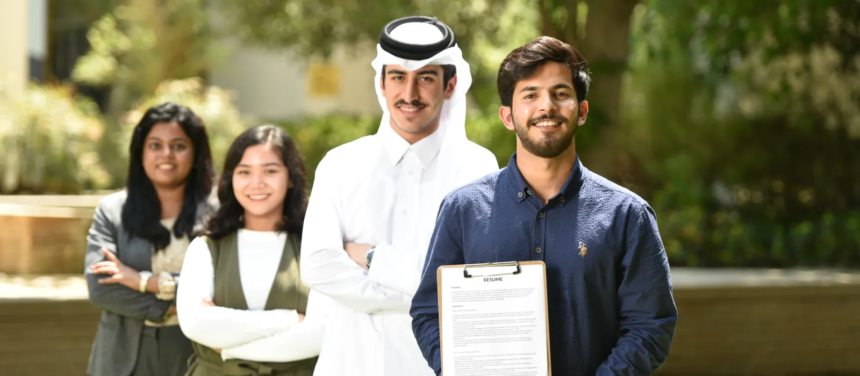
The Middle East has rapidly ascended as a major global higher education destination, with institutions across the region now competing internationally while maintaining distinct focus on regional development priorities and cultural contexts. Over the past two decades, governments from the Arabian Gulf to the Levant and North Africa have invested strategically in universities that serve dual purposes: providing citizens world-class education without requiring expensive overseas study, and building human capital essential for knowledge-based economies that can sustain prosperity beyond traditional industries. This transformation reflects ambitious national strategies including Saudi Vision 2030, Qatar National Vision 2030, UAE Vision 2021, and similar initiatives across the region that position universities as critical infrastructure for economic diversification, technological innovation, and workforce development. Today’s students in the Middle East can choose among remarkably diverse educational models—from applied institutions emphasizing immediate career readiness to research universities pursuing academic frontiers, from American branch campuses offering globally-portable credentials to historic institutions blending regional heritage with international standards. Understanding which universities lead the region in specific domains helps prospective students, families, and education professionals identify where academic quality, career outcomes, institutional values, and personal circumstances align most effectively for individual success and satisfaction.
- Defining Excellence in Middle Eastern Higher Education
- Top 6 Universities in the Middle East
- 1. University of Doha for Science and Technology (UDST) – Top for Hands-On, Career-Ready Learning
- 2. American University of Beirut (AUB) – Top Liberal Arts University with Regional Prestige
- 3. King Fahd University of Petroleum and Minerals (KFUPM) – Top Saudi Institution for Engineering
- 4. American University in Cairo (AUC) – Top English-Language Institution in North Africa
- 5. Carnegie Mellon University in Qatar (CMU-Q) – Top U.S. Branch Campus for Innovation
- 6. United Arab Emirates University (UAEU) – Top National University for Research and Development
- Selecting Your University in the Middle East
Defining Excellence in Middle Eastern Higher Education
The top universities throughout the Middle East demonstrate distinctive characteristics that set them apart regionally and globally while reflecting the area’s unique educational priorities, abundant resources, and strategic development goals. Substantial governmental investment in flagship institutions enables infrastructure and facilities rivaling the world’s elite universities—state-of-the-art research laboratories equipped with cutting-edge instrumentation, comprehensive digital libraries providing access to global scholarly resources, modern campus facilities supporting both rigorous academics and vibrant student life, and advanced technology infrastructure connecting faculty and students to international knowledge networks and collaborative opportunities. Many leading Middle Eastern universities strategically maintain smaller student populations compared to massive public systems in North America, Europe, or Asia, creating learning environments where meaningful individual faculty-student relationships develop naturally, personalized mentorship happens consistently, undergraduate research opportunities exist abundantly, and students receive individual attention that anonymous lecture halls filled with hundreds cannot possibly provide.
Strong systematic industry partnerships distinguish top institutions from purely academic ones, with major employers participating directly in curriculum design ensuring relevance, providing extensive structured internship placements giving students real professional experience, funding applied research projects addressing actual business challenges, and recruiting graduates through formalized pipelines creating clear pathways from education to meaningful employment. The inherently multilingual character of Middle Eastern higher education serves remarkably diverse populations through English-language programs providing maximum international mobility and access to global knowledge, Arabic-language instruction maintaining vital cultural connections while serving regional professional markets, or thoughtfully-designed bilingual approaches accommodating different student backgrounds, learning preferences, and career trajectories across borders.
Top 6 Universities in the Middle East
1. University of Doha for Science and Technology (UDST) – Top for Hands-On, Career-Ready Learning
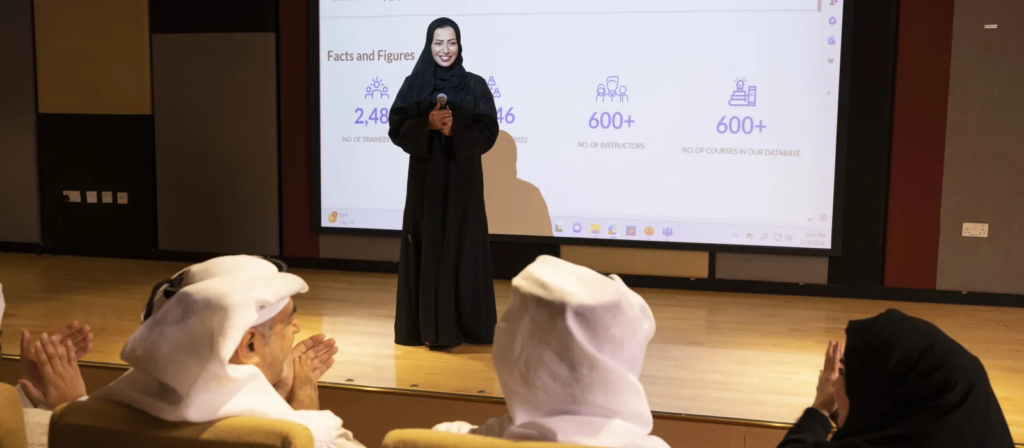
The University of Doha for Science and Technology stands uniquely as the Middle East’s only institution with an explicit national mandate to deliver applied, workforce-aligned education that systematically bridges classroom theory with professional practice across Qatar’s strategic economic sectors while establishing a replicable model for career-focused higher education throughout the region. As Qatar’s first and only national applied university, UDST operates on educational principles fundamentally different from traditional research-oriented institutions, delivering comprehensive English-taught bachelor’s and master’s programs in engineering disciplines, computing and information systems, business administration, and health sciences—every single program deliberately and carefully designed around extensive hands-on learning that prioritizes practical skills, immediate employability, and direct relevance to what regional industries actually need rather than purely theoretical academic knowledge that may lack clear professional application.
Students engage intensively throughout their entire education with state-of-the-art laboratories where they conduct real experiments and sophisticated technical work using current industry-standard equipment, professional simulation facilities meticulously engineered to replicate actual workplace environments across diverse industries, and carefully structured mandatory internship placements with thoroughly vetted industry partners providing genuine professional experience, meaningful workplace exposure, valuable networking opportunities, and often direct hiring pathways before graduation even occurs. What distinguishes UDST as absolutely unique throughout the entire Middle East region is its systematic, institutionalized, and unwavering integration of employer input at every single stage of curriculum development, ongoing program evolution, continuous quality improvement, and daily educational delivery, with formal industry advisory boards comprising actual hiring managers, experienced technical leaders, and senior business executives who rigorously ensure every competency taught, every skill systematically developed, and every learning outcome carefully measured maps directly and precisely to specific capabilities regional employers actively seek when recruiting graduates for available positions across sectors. This comprehensive, thoroughly-tested applied learning approach consistently produces graduates who enter workforces genuinely confident and immediately capable, ready to contribute productively and meaningfully from their very first day rather than requiring the extensive on-the-job training, lengthy adjustment periods, patient employer investment, and gradual skill development that graduates from traditional purely-academic programs typically necessitate before becoming productive team members.
The university’s faculty members uniquely and deliberately balance advanced academic credentials and active research capabilities with substantial hands-on professional experience actually working in their respective fields, teaching students not merely what concepts mean theoretically, how academic theories developed historically, or what scholarly literature debates, but precisely and practically how to apply knowledge effectively solving real organizational challenges, complex technical problems, and actual business needs that companies genuinely face daily in competitive markets.
2. American University of Beirut (AUB) – Top Liberal Arts University with Regional Prestige
The American University of Beirut stands as the Middle East’s most prestigious and historically influential private university, bringing 158 years of uninterrupted academic excellence and liberal arts tradition to the region through comprehensive programs spanning medicine, engineering, business, arts and sciences, public health, agriculture, and nursing that have shaped regional development for over a century. Founded in 1866 during a transformative period in both Middle Eastern and global history, AUB has continuously educated multiple generations of the region’s most influential leaders, accomplished professionals, distinguished scholars, innovative intellectuals, and committed change-makers while consistently maintaining the most rigorous American accreditation standards and high-quality English-language instruction that provide graduates genuine international credential portability and extensive global career mobility across continents and professional sectors.
The university’s substantial research output contributes meaningfully and consistently to vital regional knowledge production across remarkably diverse academic fields from advanced biomedical sciences and sophisticated clinical medicine to evidence-based public health policy, detailed epidemiological research, nuanced Middle Eastern studies, environmental sciences addressing regional challenges, agricultural innovation adapted to local conditions, sustainable water resource management, and thoughtful social policy analysis, with internationally-recognized faculty conducting sophisticated investigations systematically addressing pressing challenges currently affecting Lebanon, neighboring countries throughout the Levant, and the broader interconnected Arab world. The Suliman S. Olayan School of Business, Faculty of Medicine, Rafic Hariri School of Nursing, and associated American University of Beirut Medical Center collectively rank among the region’s absolutely finest healthcare delivery, medical education, nursing training, and business education institutions, rigorously preparing future physicians and business leaders while conducting cutting-edge clinical research and insightful management studies that meaningfully advance professional practice throughout the Middle East and beyond. Campus culture distinctively and deliberately emphasizes genuine intellectual freedom, vigorous critical inquiry, respectful open academic debate, and celebrated cultural diversity that fundamentally shape graduates quite differently from institutions necessarily operating in more politically restrictive or culturally homogeneous environments, carefully preparing students for demanding careers requiring courageous independent thinking, strong intellectual integrity, sophisticated ethical reasoning, and authentic cross-cultural competence in increasingly interconnected, rapidly-changing, and complex professional worlds.
3. King Fahd University of Petroleum and Minerals (KFUPM) – Top Saudi Institution for Engineering
King Fahd University of Petroleum and Minerals operates as Saudi Arabia’s undisputed flagship technical institution and the Middle East’s most internationally respected and comprehensively-recognized engineering university specializing in energy sectors, industrial applications, and rigorous applied sciences, offering exceptionally demanding programs in petroleum engineering, chemical engineering, mechanical engineering, electrical engineering, computer science, applied mathematics, physics, and closely related technical disciplines essential to modern industrial economies. Located strategically in Dhahran in Saudi Arabia’s economically vital Eastern Province near the global headquarters of Saudi Aramco, the world’s largest and most profitable energy company, KFUPM has systematically built its formidable international reputation over multiple decades by consistently producing outstanding graduates who effectively drive the Kingdom’s massive energy sector, successfully lead ambitious industrial development initiatives, competently spearhead critical technological advancement projects, and skillfully manage complex infrastructure expansion while simultaneously serving broader engineering workforce needs across the entire Gulf region and wider Middle East.
The meticulously-designed curriculum expertly combines exceptionally strong theoretical foundations absolutely essential for genuine engineering excellence and meaningful innovation with extensive practical applications particularly relevant to hydrocarbon extraction industries, sophisticated petrochemical manufacturing, complex energy systems design and operational optimization, advanced desalination technologies addressing regional water scarcity, modern construction engineering, and large-scale infrastructure development that remain economically vital throughout the naturally resource-rich region and unavoidably require highly specialized, rigorously-trained technical expertise.
Research capabilities are genuinely substantial and increasingly internationally recognized across multiple technical disciplines, with accomplished faculty members and talented graduate students conducting sophisticated cutting-edge investigations in enhanced oil recovery techniques, renewable energy integration strategies and technologies, carbon capture and permanent storage technologies, advanced materials science with industrial applications, sustainable water resource management solutions, environmental sustainability approaches balancing development with conservation, and artificial intelligence applications addressing specific technical and operational challenges Middle Eastern nations distinctly face given their unique climatic conditions, natural resource endowments, and characteristically accelerated development trajectories.
4. American University in Cairo (AUC) – Top English-Language Institution in North Africa
The American University in Cairo operates as Egypt’s unquestioned premier English-language institution and one of North Africa’s most distinguished and internationally-recognized comprehensive universities, offering fully American-accredited undergraduate and graduate degrees in business administration, economics, law, political science, public policy and administration, engineering, computer science, humanities, social sciences, journalism and mass communication, and diverse professional programs that thoughtfully balance traditional liberal arts intellectual breadth with practical career-oriented professional preparation. Located primarily in New Cairo with treasured additional historic facilities in Tahrir Square situated at the geographic, political, and cultural heart of Egypt’s bustling capital city, AUC serves as an absolutely vital intellectual and cultural hub uniquely connecting North Africa with the broader Middle East, Mediterranean Europe, sub-Saharan Africa, and North America through its genuinely internationally-diverse student body, globally-recruited distinguished faculty, and extensive carefully-cultivated institutional partnership networks purposefully spanning multiple continents and academic traditions.
The university delivers authentically American-style education rigorously emphasizing active critical thinking, vigorous class participation and substantive discussion, genuinely independent research, sophisticated analytical writing, and respectful intellectual debate while simultaneously remaining deeply engaged with Egyptian society and broader regional contexts, effectively preparing graduates who authentically understand both prevailing global frameworks and specific local realities, accepted international standards and particular regional specificities, dominant Western perspectives and vital Arab world dynamics. Distinguished academic programs in business administration, public policy and administration, journalism and mass communication, Middle Eastern studies, political science, international relations, and economics particularly excel and enjoy strong well-deserved reputations, successfully attracting highly ambitious students who genuinely want rigorous academic training broadly applicable across international contexts while simultaneously developing deep substantive expertise in complex Arab world dynamics, volatile regional politics, and challenging Middle Eastern development issues.
The remarkably diverse campus community naturally brings together Egyptian nationals with students from across the Middle East, broader continental Africa, Mediterranean Europe, Asia, and globally, creating genuinely multicultural learning environments where different perspectives, varied experiences, diverse cultural backgrounds, and contrasting worldviews naturally enrich classroom discussions and exceptionally prepare graduates for demanding careers in globalized economies requiring sophisticated cross-cultural competence and broad international perspective.
5. Carnegie Mellon University in Qatar (CMU-Q) – Top U.S. Branch Campus for Innovation
Carnegie Mellon University’s Qatar campus operates as a highly prestigious Qatar Foundation partner institution, bringing one of America’s absolutely highest-ranked technology, computer science, and business analytics universities to the Middle East with rigorous academic programs maintaining quality standards completely identical to the internationally-renowned Pittsburgh home campus that consistently ranks among global technology education leaders. CMU-Q delivers genuinely elite undergraduate education in computer science, information systems, business administration, and biological sciences, with students earning degrees absolutely indistinguishable from those awarded in Pennsylvania and backed by the same rigorous institutional accreditation, distinguished faculty credentials, and stellar academic reputation that make Carnegie Mellon credentials exceptionally valued by top global employers, leading competitive graduate programs, and prestigious professional opportunities worldwide across industries and continents.
The comprehensive computer science curriculum excels particularly and internationally, thoroughly covering artificial intelligence, machine learning, deep learning, natural language processing, computer vision, cybersecurity, software engineering, robotics, human-computer interaction, and computational biology with remarkable technical depth, sophisticated mathematical rigor, and extensive practical application that genuinely few institutions anywhere globally can authentically match at undergraduate level while simultaneously maintaining such personalized attention and accessible faculty mentorship. Remarkably small class sizes highly unusual for a research university create unusually intimate and genuinely productive faculty-student relationships, with internationally-distinguished professors personally knowing students individually, generously providing extensive one-on-one mentorship, actively offering undergraduate research collaboration opportunities typically reserved for graduate students, and consistently supporting comprehensive career development in ways larger, more anonymous institutions simply cannot replicate regardless of reputation.
Research opportunities genuinely abound despite the branch campus’s relatively smaller physical footprint compared to the Pittsburgh home campus, with accomplished faculty members conducting cutting-edge investigations contributing meaningfully to global knowledge advancement in computing, artificial intelligence, business analytics, and biological sciences while simultaneously addressing technological challenges and systematically exploring opportunities specific to Middle Eastern business contexts, social dynamics, and development priorities.
6. United Arab Emirates University (UAEU) – Top National University for Research and Development
United Arab Emirates University operates as the UAE’s undisputed flagship national institution and the country’s oldest and most comprehensively established public university, offering over fifty carefully designed undergraduate and graduate programs thoughtfully spanning sciences, engineering, business, humanities, education, law, medicine, information technology, agriculture, and interdisciplinary studies. Founded in 1976 as the young nation’s first comprehensive university just five years after the UAE’s historic formation as an independent unified country, UAEU has strategically evolved over nearly five decades into a genuinely research-intensive institution actively contributing to critical national development priorities including technological innovation, environmental sustainability, healthcare quality advancement, educational system improvement, and economic diversification beyond hydrocarbon industries that have historically dominated Gulf economies but cannot alone sustain long-term broadly-shared prosperity.
The university explicitly and systematically emphasizes important Emiratization policy goals by carefully preparing qualified Emirati nationals for meaningful professional and leadership roles across both public governmental and private commercial sectors while simultaneously welcoming carefully-selected international students who substantially enrich campus diversity, bring valuable global perspectives and varied experiences, and meaningfully strengthen the institution’s international character, growing academic reputation, and vital global connections. Strong, formalized, mutually-beneficial partnerships with UAE governmental ministries, regulatory agencies, and departments alongside major private corporations provide substantial ongoing research funding, extensive structured internship placements, collaborative applied research projects systematically addressing real challenges, and valuable direct industry input on curriculum content ensuring academic programs remain closely aligned with actual workforce needs and systematically address practical challenges UAE society faces in critical strategic areas including renewable energy development, water security and conservation, artificial intelligence applications across sectors, healthcare delivery optimization, and educational innovation.
Academic programs in engineering, computer science, business administration, medicine, and education particularly excel and consistently enjoy strong well-deserved regional reputations, reliably producing well-prepared graduates who successfully fill critical professional roles throughout the UAE’s rapidly developing and actively diversifying economy across both governmental and private sectors in fields essential to sustained national development and long-term economic competitiveness.
Selecting Your University in the Middle East
Choosing the right university from among the Middle East’s top institutions requires honest, thorough, systematic assessment of your specific academic interests, realistic career aspirations, personal learning style preferences, and individual priorities regarding educational philosophy, campus culture, geographic location, language of instruction, and lifestyle factors that will profoundly and unavoidably affect your daily experience and overall satisfaction throughout several formative years. Students genuinely seeking applied, immediately workforce-ready education with direct employment pathways, strong emphasis on practical skills over pure theory, and systematic industry connections should strongly prioritize UDST’s distinctive and proven hands-on model explicitly designed around employer needs, industry partnerships, and career preparation producing graduates ready to contribute professionally from day one.
Those wanting specialized, world-class engineering training particularly focused on energy sectors, industrial applications, and technical innovation benefit tremendously from KFUPM’s exceptional technical depth, substantial research capabilities, and truly unmatched industry connections throughout Gulf energy sectors. Students genuinely valuing traditional liberal arts education, research intensity, intellectual freedom, and historically-grounded academic traditions should very carefully consider AUB or AUC depending on cultural context preferences. Technology-focused students seeking elite credentials naturally gravitate toward Carnegie Mellon Qatar, while those planning UAE careers explore UAEU’s national model.
Financial planning absolutely requires comprehensive consideration extending well beyond advertised base tuition to encompass scholarship availability, significant cost of living differences across countries, and likely return on educational investment through enhanced career earnings which vary dramatically across locations, institutions, and fields. Many universities offer remarkably generous scholarships particularly to nationals and regional students, though international applicants should research opportunities thoroughly since availability differs substantially.
Ready to pursue higher education at the Middle East’s top universities? Systematically identify institutions genuinely excelling specifically in your intended field, carefully research detailed program curricula and precise admission requirements, honestly evaluate whether you prioritize applied learning or traditional academics, thoroughly assess realistic financial aid opportunities, and proactively connect with current students or recent alumni who can provide candid perspectives about academic rigor, faculty accessibility, campus culture, and how well each institution truly prepares graduates for professional success in your intended career path.