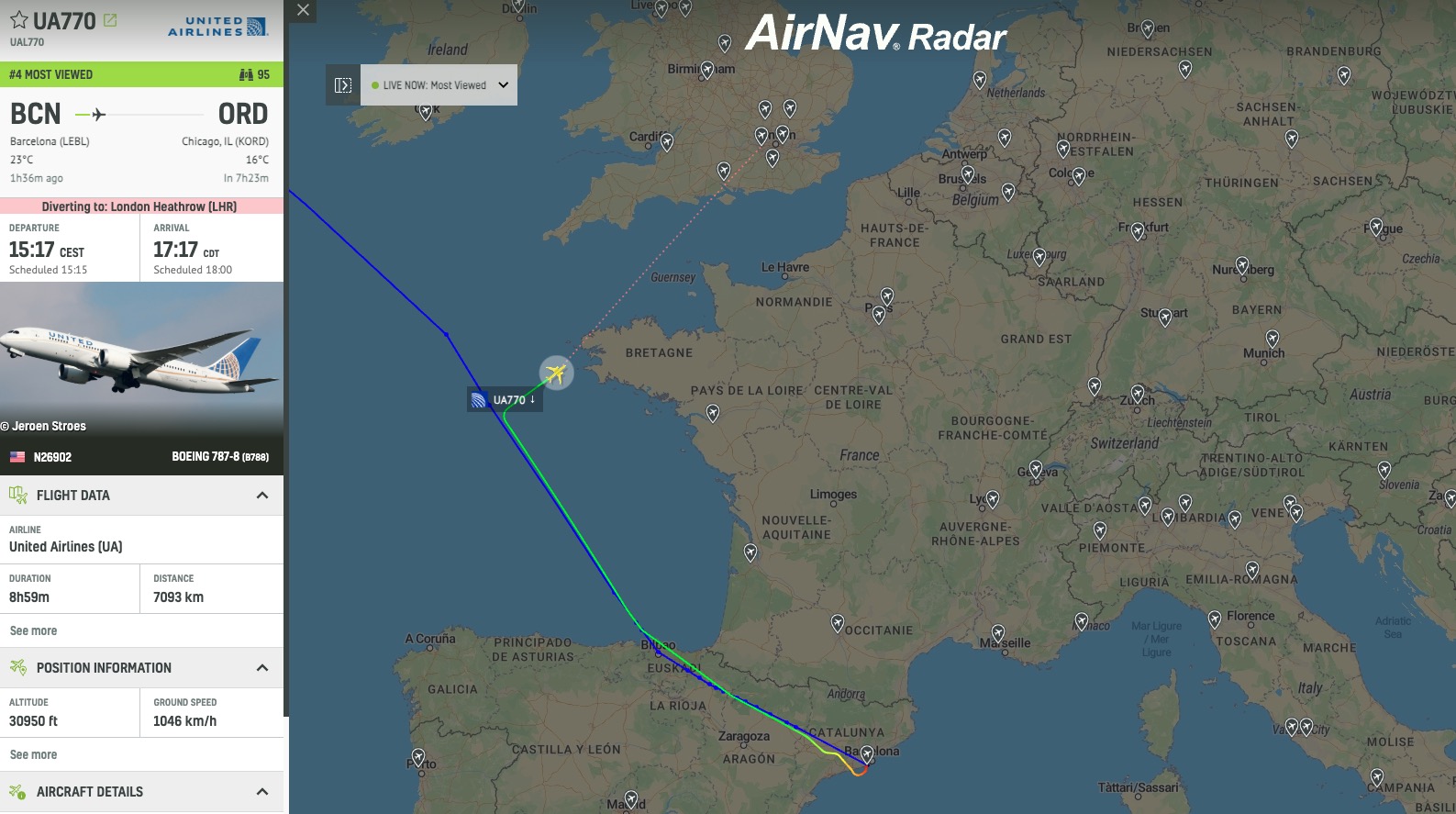
Air travel is widely considered one of the safest modes of transportation. However, when news breaks about an emergency diversion, it naturally raises questions among passengers and aviation observers. The United Airlines Flight UA770 emergency diversion recently became a topic of discussion after the aircraft changed course due to a mid-flight issue.
In this comprehensive report, we’ll explore what an emergency diversion means, what may have led to the diversion of United Airlines Flight UA770, how airlines manage such situations, and what travelers should understand about aviation safety protocols.
What Is an Emergency Diversion in Aviation?
An emergency diversion occurs when an aircraft changes its scheduled destination to land at an alternate airport due to a safety concern. This can happen for several reasons, including:
- Mechanical or technical issues
- Medical emergencies on board
- Severe weather conditions
- Cabin pressure irregularities
- Security concerns
Airlines follow strict international aviation guidelines when making such decisions. Diversions are precautionary measures designed to protect passengers and crew.
In the case of United Airlines Flight UA770, the diversion was handled according to standard aviation procedures, ensuring the safety of everyone onboard.
Overview of United Airlines and Safety Standards
United Airlines is one of the largest carriers in the world, operating thousands of flights daily across domestic and international routes. With decades of operational experience, the airline adheres to strict safety regulations governed by aviation authorities.
Commercial airlines operate under:
- Rigorous aircraft maintenance schedules
- Continuous pilot training programs
- Real-time aircraft monitoring systems
- Federal and international safety compliance standards
Because of these layered safety measures, emergency diversions are generally precautionary rather than catastrophic events.
What Happened on United Airlines Flight UA770?
While exact operational details may vary depending on official reports, early information indicates that United Airlines Flight UA770 emergency diversion occurred after the crew detected a potential technical concern during flight.
Rather than continue to the scheduled destination, pilots chose to divert to the nearest suitable airport. This is standard aviation practice when any irregularity is detected.
Key points typically involved in such cases include:
- Pilots receiving cockpit alerts
- Coordination with air traffic control
- Selection of the closest safe airport
- Controlled landing procedures
- Ground inspection of the aircraft
Passengers onboard Flight UA770 reportedly landed safely, and no serious injuries were reported.
Why Do Pilots Divert Flights?
Pilots are trained to prioritize safety above schedules, operational costs, or convenience. Even minor anomalies can trigger precautionary action.
Some common triggers for emergency diversion include:
1. Mechanical Alerts
Modern aircraft are equipped with advanced sensor systems. If a warning light signals an irregularity—such as hydraulic pressure imbalance or engine monitoring alerts—pilots assess whether continuing the flight is safe.
2. Medical Emergencies
If a passenger experiences a severe medical issue, diversion allows for quicker access to emergency medical services.
3. Cabin Pressurization Issues
Aircraft cruising at high altitudes rely on cabin pressure systems. Any abnormality requires immediate evaluation.
4. Smoke or Odor in Cabin
Even a minor odor can prompt precautionary landing procedures.
The United Airlines Flight UA770 emergency diversion appears consistent with safety-first aviation decision-making.
How Airlines Handle Emergency Diversions
When a diversion is declared, multiple teams coordinate simultaneously:
- Cockpit crew communicates with air traffic control
- Airline operations center arranges ground handling
- Emergency response teams prepare at diversion airport
- Customer service coordinates rebooking and accommodations
The process is highly structured and designed to minimize risk.
Step-by-Step Diversion Process:
- Assessment in Cockpit – Pilots evaluate system data.
- Declaration to ATC – Air traffic control receives priority clearance.
- Descent and Landing – Controlled landing at alternate airport.
- Inspection – Maintenance engineers assess aircraft condition.
- Passenger Support – Rebooking or alternate arrangements.
This is likely the same process followed during the UA770 diversion.
Passenger Safety During a Diversion
Passengers often experience anxiety during unexpected flight changes. However, commercial aircraft are engineered with redundancy systems.
Important facts to remember:
- Aircraft can safely fly even with certain system failures.
- Pilots train extensively in simulators for emergency scenarios.
- Diversions are typically precautionary, not life-threatening events.
If you are onboard during a diversion:
- Remain seated and follow crew instructions.
- Avoid speculation until official updates are provided.
- Trust standard aviation safety protocols.
The successful landing of United Airlines Flight UA770 demonstrates the effectiveness of these systems.
Aviation Safety in Context
Statistically, aviation remains one of the safest industries globally. Diversions happen regularly across airlines worldwide, often without widespread media attention.
Modern aircraft feature:
- Dual or triple-redundant systems
- Continuous real-time monitoring
- Predictive maintenance analytics
- Highly regulated inspection schedules
The aviation industry learns from every incident to further strengthen safety standards.
What Happens After an Emergency Diversion?
Following a diversion:
- Aircraft undergoes thorough inspection.
- Engineers document findings.
- If required, parts are repaired or replaced.
- Regulatory bodies may review reports.
- Passengers are re-accommodated.
Airlines prioritize minimizing passenger inconvenience while ensuring aircraft airworthiness before returning to service.
Impact on Travelers
The United Airlines Flight UA770 emergency diversion may have caused temporary delays and scheduling disruptions. However, airlines typically offer:
- Rebooking on next available flights
- Hotel accommodations if required
- Meal vouchers
- Customer support assistance
Travel insurance policies may also cover unexpected travel interruptions.
The Role of Pilot Training
Airline pilots undergo:
- Recurrent simulator training every six months
- Emergency procedure drills
- Crew resource management exercises
- System malfunction training
These training programs ensure that pilots are prepared for rare but possible inflight irregularities.
The safe handling of Flight UA770 highlights how aviation training translates into real-world safety outcomes.
Media Attention vs. Aviation Reality
Emergency diversions often generate headlines because the word “emergency” sounds alarming. However, in aviation terminology, it frequently reflects a precaution rather than immediate danger.
Thousands of flights operate daily with minor adjustments, including precautionary landings.
The UA770 incident serves as a reminder that aviation safety systems are proactive, not reactive.
Key Takeaways from the United Airlines Flight UA770 Emergency Diversion
- Diversions are standard safety procedures.
- Passenger safety is always the top priority.
- Modern aircraft are built with multiple safety redundancies.
- Airline crews receive extensive emergency training.
- Most diversions end safely, as in the case of UA770.
While unexpected travel disruptions can be frustrating, they often demonstrate that aviation safety protocols are functioning as intended.
FAQs
1. What caused the United Airlines Flight UA770 emergency diversion?
The diversion was reportedly triggered by a potential technical concern detected during flight. Pilots opted for a precautionary landing to ensure passenger safety.
2. Was anyone injured during the UA770 diversion?
Available reports indicate that the aircraft landed safely and no serious injuries were reported.
3. What does an emergency diversion mean for passengers?
It means the aircraft landed at an alternate airport due to a safety-related concern. It does not automatically indicate a life-threatening situation.
4. How common are emergency diversions?
They are relatively uncommon but not rare. Across global aviation operations, precautionary diversions occur regularly as part of safety protocols.
5. Can passengers claim compensation after a diversion?
Compensation policies vary depending on the cause of the diversion, airline rules, and local aviation regulations. Passengers should contact the airline for specific guidance.
Final Thoughts
The United Airlines Flight UA770 emergency diversion reflects how seriously airlines treat even minor technical concerns. Aviation is built on proactive risk management, layered safety systems, and highly trained professionals.
While diversions may be inconvenient, they reinforce the aviation industry’s commitment to passenger safety. Travelers can take confidence in knowing that every precaution is taken long before a situation becomes critical.
In the end, the safe landing of Flight UA770 stands as evidence that aviation safety procedures work exactly as they are designed to—protecting lives above all else.