Introduction
Few names in American music history spark curiosity like Sigmond Galloway — not for mainstream fame, but for the fascinating footprints he left behind. Known primarily as a jazz singer and for his high-profile marriage to gospel icon Mahalia Jackson, Galloway’s life blends music, culture, personal struggle, and legacy. Despite limited documentation and frequent historical oversight, his journey through America’s vibrant musical landscape remains a compelling story worthy of exploration.
Early Life and Background
Born on May 18, 1922, in Wetumpka, Alabama, Sigmond Galloway grew up in the racially segregated environment of the early 20th century. This era, defined by the Jim Crow South and the Great Depression, shaped his formative years and had a lasting impact on his worldview and creative impulses.
Galloway’s family roots trace back to Randolph Galloway and Mary Lee (Williams) Courtney, his parents, who raised him along with his siblings. Growing up in a region where blues, jazz, and gospel rhythms intermingled, young Sigmond absorbed an eclectic array of sounds that would later influence his musical voice.
Military Service and the Jazz Journey
Like many African Americans of his generation, Galloway served in the United States Army during World War II, returning home in 1946 with a broader perspective shaped by global conflict and the desire for artistic expression.
After his service, he moved to Gary, Indiana, a city with a thriving African-American community and a lively local music scene. There, he fully embraced jazz and began performing in clubs and venues that appreciated soulful, expressive musicianship.
Though exact records of his recordings are rare — a common situation for many jazz artists of his time — accounts describe his performances as heartfelt, rich in emotion, and evocative of both blues and jazz currents.
Rise to Regional Recognition
Galloway’s rise didn’t follow the typical path of commercial success. Instead, he earned respect among fellow musicians and jazz lovers through live performances in Midwest venues. His voice, often described as a velvety baritone, resonated with audiences who appreciated jazz that captured both technical skill and emotional depth.
While his name never reached the household-name status of contemporaries like Miles Davis or John Coltrane, Galloway maintained a presence in the regional jazz circuit — an authentic artist committed to his craft.
Meeting Mahalia Jackson: A Transformative Chapter
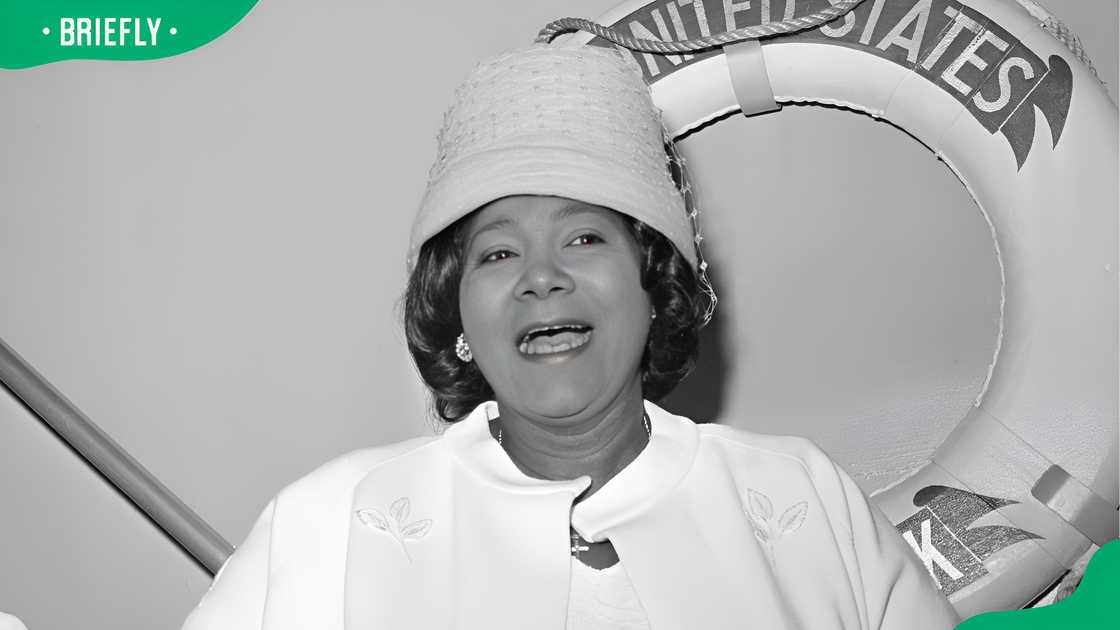
The chapter of Sigmond Galloway’s life that brought him into broader public attention began in the early 1960s when he crossed paths with Mahalia Jackson in Gary, Indiana. Jackson, born on October 26, 1911, in New Orleans, was already an international gospel music powerhouse by that time — often called the “Queen of Gospel.” Her voice carried emotional force that elevated gospel music worldwide.
Introduced through mutual friends, the connection between the jazz vocalist and the gospel icon rapidly grew into a romantic relationship rooted in mutual admiration and shared musical passion. This culminated in their marriage in 1964 — a union that surprised many given their differing musical worlds.
Life as Mahalia Jackson’s Husband
Marriage to Mahalia Jackson brought Galloway into the spotlight. Suddenly, his life was no longer just about regional jazz performances — it was intertwined with one of America’s most celebrated musical figures. Yet, the reality proved complex.
While Jackson was deeply devoted to her career and spiritual music, Galloway was rooted in secular jazz — a contrast that reflected both differing lifestyles and, ultimately, struggled harmonies in their personal lives.
Sources report that the intense schedules, financial disagreements, and conflicting expectations contributed to growing tensions. Jackson’s health issues during this period also added stress to their relationship.
Separation and Aftermath
After roughly three years of marriage, Galloway and Jackson divorced in 1967. The split marked a sharp transition for both individuals: Jackson refocused on her influential gospel career, and Galloway retreated from the glare of public fame into a quieter existence.
Unlike his ex-wife, Galloway did not remarry or maintain a prominent public profile in the years that followed. He remained connected to music but preferred a low-profile life reflective of his personality and priorities.
Final Years and Passing
Sigmond Galloway passed away on May 18, 1972, at the age of 50 — coincidentally on his birthday — in Gary, Indiana. Details about the circumstances of his passing are limited, but his early death solidified an enigmatic legacy that remains partially shrouded in mystery.
Though he never achieved chart-topping fame, his contributions to jazz and his fascinating life story — particularly his union with Mahalia Jackson — continue to draw interest for historians, music lovers, and cultural scholars.
Legacy and Impact
Galloway’s life represents the nuanced narrative of many mid-20th-century African-American artists: talented, hardworking, influential within musical communities, yet often overshadowed by larger historical figures. His journey illustrates the rich, interconnected fabric of American musical heritage — where jazz, gospel, and personal determination intersected against the backdrop of social change.
Today, his name is more than a footnote in Mahalia Jackson’s story — it echoes as a reminder of the unsung artists who shaped the American soundscape one performance at a time.
Frequently Asked Questions (FAQs)
Q: Who was Sigmond Galloway?
A: Sigmond Galloway was an American jazz singer born on May 18, 1922, in Wetumpka, Alabama. He is best known for his music career and his marriage to gospel legend Mahalia Jackson.
Q: What musical style did Sigmond Galloway perform?
A: Galloway was a jazz vocalist, known for his smooth, soulful voice that drew from blues, gospel influences, and improvisational jazz traditions.
Q: How long was Sigmond Galloway married to Mahalia Jackson?
A: Galloway and Mahalia Jackson were married for approximately three years, from 1964 until their divorce in 1967.
Q: Did Sigmond Galloway have any children?
A: Historical records and reliable sources indicate that Galloway did not have children with Mahalia Jackson, and limited documentation exists about any descendants.
Q: When did Sigmond Galloway die?
A: He passed away on May 18, 1972, in Gary, Indiana, at the age of 50.
Conclusion
Sigmond Galloway’s story is one of resilience, passion, and quiet influence. Though his name may not be as instantly recognizable as others in American music history, his contributions to jazz and his unique place in cultural history are undeniable. His life reflects both the hidden narratives and vibrant rhythms that have shaped American music — reminding us that every artist’s journey holds value beyond fame.